I hope you've been enjoying the snow and the long weekend!
Weekend notice:
***Grades in engrade may appear low - I'm in the midst of grading LOTS OF WONDERFUL project, reflections, and labs.
***There is now an extra credit option post on the blog.
Here's what we'll be up to this week: ***Note that the test day has been pushed back one day so we have more time to study as a class.
Monday: NO SCHOOL! Happy Presidents' Day
Tuesday: What is the evolutionary past of humans?
We will wrap up "Natural Selection, Monsters, and Humans, OH MY!" post activities, and
review
Wednesday: How can I effectively study and show what I've learned?
Battle of the Blocks begins..., stress relief and study skills, in-class review
Thursday: What have I learned about geology and evolutionary biology? TEST DAY! Spend the period showing me all that you know!
Friday: What can we learn about natural selection and evolution from flies?
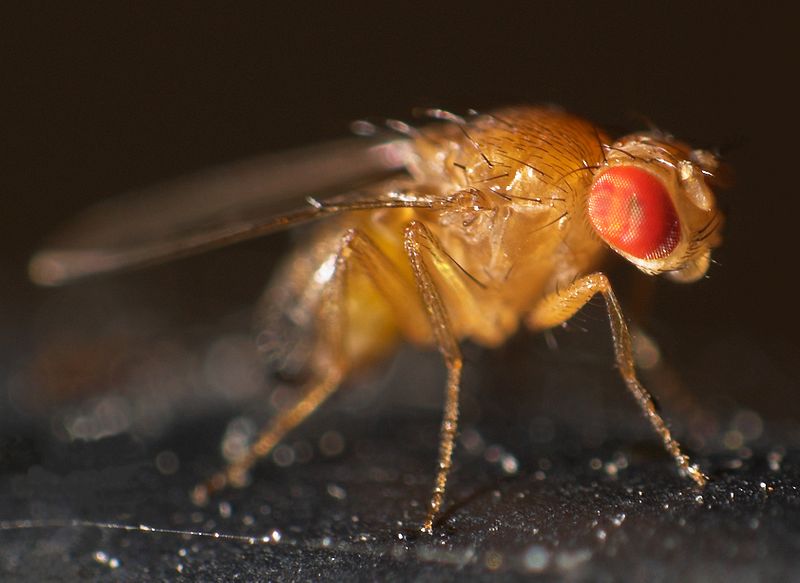
THE FLIES ARE BACK! Finish natural selection with flies lab!
Assignments Due:
Monday: No school!
Tuesday: Nothing - late projects, labs, reflections
Wednesday: Nothing
Thursday: Notebook check in class begins, TEST
Friday: Notebook check in class finishes, Glacier post extra credit due
Monday, Feb 25: Salamander lab corrections and extra credit due
Tuesday, Feb 26: Fly lab due and Future of the Earth project corrections due
Here is an AWESOME opportunity for you to earn some extra credit.
Welcome to the Juneau Icefield!
How to earn extra credit:
1) Read the interview below with my awesome friend Kate. She spent 8 weeks on a glacier two summers ago and is going back this summer!!
2) Comment on this post with the following (up to 7 points on your Future of the Earth Project, Due by Feb 22):
a) In your own words, describe fieldwork.
b) In your own words, describe how can we learn about climate from glaciers.
c) In your own words, describe why is long-term research important.
d) Would you do the JIRP? Why or why not?
e) Ask Kate two well thought out, relevant questions about JIRP.
Interview:
Ms. Nickel: Can you tell us when you were on a glacier and why you were there?
Kate: Two summers ago, in 2011, I was a fortunate participant of the Juneau Icefield Research Program. JIRP is a long-term project for monitoring glaciers in Southeast Alaska, British Columbia and the Yukon. Check out this introductory video: Juneau Icefield Research Program.
If you look at a satellite image of Alaska from Google Maps you can see that the Southeast corner has much more white than the rest of the state.
The white areas are covered in snow and ice. In the Gulf of Alaska a lot of ocean water evaporates, then it moves west and falls as rain and snow in the mountains along the coast. These coastal mountains are so high and cold that they stay covered in snow all year. Year after year, snow piles up in the mountains and valleys until it becomes so heavy that it starts to flow downhill. A glacier is ice that flows like a river, except much slower. Zoom in to the white areas on the Google Map or on this interactive map of the Juneau Icefield. Do you see land that looks like it is covered in white rivers? The white rivers are actually valleys filled with glaciers As you can see, Southeast Alaska has so many glaciers that it is a great to place to go to study glaciology.
Ms. Nickel: So why would you want to study glaciers or be a glaciologist?
Kate: First of all, glaciers hold buried clues to the past. As snow piles up on a glacier it traps and preserves things, just like a fossil preserved in the layers of a sedimentary rock. Some scientists drill ice cores through layers of ice that have been piling up for hundreds of thousands of years. The world’s oldest ice core, from a place called Dome C in Antarctica, contains ice from 800,000 years ago. Dust particles, air bubbles, and isotopes trapped in the ice offer clues about Earth’s past climate. This is important for people interested in global climate change. To determine whether Earth’s climate is changing, we have to compare today’s climate to a long record of past climate. Watch these videos to learn more about ice cores: British Antarctic Survey, US National Ice Core Lab WAIS, US National Ice Core Lab Greenland.
Another reason to study glaciers is that they are very sensitive to their environment. If the air temperature around the glacier rises just one or two degrees it can cause lots of ice to melt. Recently glaciers around the world have been melting, also called retreating, at record speeds. This indicates that global air temperatures are increasing and climate is changing. Here’s some footage of glacier retreat around the world: Glacier Retreat – Extreme Ice Survey.
This is what a glaciologist looks like :-)
It is also important to understand glaciers because they are a natural resource. It some places, especially below the Himalayas, millions of humans depend on glacial melt water as a source of fresh drinking water.
Personally, I like studying glaciers because I think they are extremely beautiful. Plus, glaciologists get to do all sorts of adventurous fieldwork on skis and mountaineering rope teams!
Although some scientists wear white coats and goggles and work in a laboratory, other scientists do fieldwork. Fieldwork is any research outside of a laboratory. JIRP is a field program. The entire 6 to 8-week field season takes place outside on ice.
Ms. Nickel: How do you study glaciers?
In a snow pit!
Kate: In the field we use GPS to study the size, speed and shape of the glacier. We dig snow pits to study how much and what kind of snow fell in the last year. We also can use seismic tools to study the deep inside of the glacier. You’ve probably already learned in class that many Earth processes occur very slowly over a very long period of time. Sometimes tiny changes that occur for many years end up having big consequences. This is why the Juneau Icefield Research Program is a long-term monitoring project. The program started in 1946. For the past 66 summers scientists have recorded similar GPS and snow pit data from the Juneau Icefield. When we look at this long-term record it is possible to see small and slow, but important, changes. While students help maintain the long-term record some other researchers study different types of science including mountain ecology and meteorology.
Ms. Nickel: What is a day in your life like with JIRP?
Prussik practice in a cabin
Research in a crevasse
Kate: There are about seven base camps on the Icefield. Students and researchers stay in rustic cabins at each camp. A typical day consists of an 8:00 breakfast, camp chores until 10:00, then 6-8 hours of fieldwork. During the day we leave camp on skis or snowmobiles to collect data. One major and unique concern about doing fieldwork on a glacier is the safety. Huge crevasses can be disguised by a thin layer of snow. We do not want to fall into a crevasse so we wear skis to distribute our weight over more area and sometimes have to “rope-up” with friends.
Costume Party above the Gilkey Trench
Most nights we return to camp for a warm meal and comfortable bunk bed. However, sometimes we camp in tents on the ice for 2 or 3 days (which can be quite chilly)! In general there is no phone or Internet. The only communication with the outside world occurs every two or three weeks when a helicopter drops off new food and snail mail. We still found lots of ways to have fun including costume and dance parties. When moving between base camps we will ski up to 12-15 miles carrying all of our gear. My backpack weighed about 50 pounds. Even in a heavy pack, there isn’t room for too many pairs of clothes. JIRP students wear the same clothes everyday and do laundry by hand about once a week. None of the camps have plumbing, so we went to the bathroom in outhouses and just didn’t shower… for almost two months!
Hey All-Stars!
Here is the time line for Thursday and Friday:
Thursday:
1) Turn in Project Parts A-D and works cited
2) Warm up
3) Do the textbook activities below IN YOUR NOTEBOOK!
4) Start working on the Monster Mash: A Dichotomous Key Activity
Friday:
1) Turn in Project Reflection
2) Warm up
3) Finish Monster Mash activity
4) Crash course in human evolution!
Textbook Activities
Use a textbook to complete the following sentences and tasks. WRITE THE ENTIRE SENTENCES!
1) ____________ ________________ explains how living things evolve. (pg B21)
2) Darwin breeding pigeons and selecting for particular traits is an example of ______________ selection. (pg B21)
3) List and describe the 4 key principles of natural selection that Darwin noticed. Give an example (pg B21-23)
4) Define "ancestor" (pg B29) and "vestigial organs" (pg B30) in the back of your notebook.
5) Describe how the presence of vestigial organs and similar structures but different functions support evolution.
6) First studied in the 1700s, _______________ of many different species are similar even though the adults are not. List 3 similarities between the early embryos of the organisms on pg B32.
7) Define "gene" (pg B33) in the back of your notebook.
8) Human and mice have _________ (similar or different, choose one) DNA. (pg B34)
9) Define "classification" and "taxonomy" in the back of your notebook. (pg B44)
10) Scientists classify animals based on ________________ and _______________ evidence. (pg B48)
11) Classification systems ________________ as scientists learn more - an example of this is the change from focusing on kingdoms to looking at domains (Bacteria, Archaea, and Eukarya). (pg B60)
RETURN THE TEXTBOOK TO THE BOOKSHELVES!
Monster Mash
Part 1:
1) Name all the monsters people at your table created.
2) Figure out how to sort them - look at body shape, eyes, wings, etc.
3) Write clues to sort and name the monsters. From each set of two clues in the dichotomous key to the next, one monster species should be named. The other clue should move onto another set that classifies the remaining monsters.
Part 2:
1) Switch dichotomous keys and monsters with another table.
2) Use the key to name the monsters you are given.
3) Check your answers.
The Evolutionary History of a Human
Visit this link. Use questions 1, 2, and 4 to help you WRITE THE COMPLETED SENTENCES in your notebook!
1) Humans ________ __________ evolve from monkeys.
2) Humans are more closely related to...
3) Hominid species started developing from an ancestor humans share with __________ about ____ to ____ million years ago.
4) All/Not all (choose one) hominid species are direct ancestors of humans.
5) The scientific name for humans is __________ _______________.
6) Humans vs Neanderthals...The Two Hypotheses
a) All Europeans are part __________ and part ______________. OR
b) The humans out competed the ______________ so Europeans are all human.
7) Human evolution started in _________________ and since then humans have migrated all over.
Watch this video:
*Disclaimer: I chose this video because I think Richard Dawkins does a great job explaining the evolutionary tree of humans and showing relationships and classifications of living organisms. I don't really care at all about Celebrity Big Brother UK 2010...*
***Your test is on Feb 20. Please don't leave studying until the last minute. Study guides were distributed on Wednesday. USE THEM! Have a WONDERFUL long weekend! Travel safely!***
Random monster video, just for fun...
Monday: How can we identify various species?
Tuesday: How is scientific data analyzed? (Darwin's Birthday!)
Wednesday: What conclusions can you come to about why there is species diversity in salamanders in North Carolina?
Thursday: How do we know what's related to what? (Happy Valentine's Day!)
Friday: What is the evolutionary past of humans?
***IF you have 1 or no missing assignments and you make Darwin a colorful birthday card with a natural selection pun, I will add up to 3 points of extra credit to an assignment of your choosing.***
Assignments Due:
Tuesday: List of missing assignments and Darwin Birthday Cards (Extra credit opportunity)
Wednesday: Monster drawing and lab due AT THE END OF CLASS!
Thursday: Project Part D
Friday: Project Reflection
Monster Drawing Instructions:
We will be creating dichotomous keys to classify monsters. Please draw a monster on a clean sheet of paper. This is due by Wednesday at the end of class!!!
Will it have fur, feathers, or scales?
Will it be blue, red, green, or purple?
Will it have arms and legs? Claws? Fins?
Will it have eyes? How many?
Will it have fangs? A tale?
Happy Week of Darwin's Birthday, Mardi Gras, and Valentine's Day!! (and a delayed opening) (and the week before a 4 day week!)
Here are project reflection guidelines. This is due on Friday, February 15.
Write 2 paragraphs (at least 6 sentences each) describing the learning you did during the project.
Paragraph 1: What you did and what you learned Some ideas to get you started:
I learned _________________________ from this project.
I created a supercontinent based on evidence from _______________________.
I told the evolutionary history of my invented species using evidence from _____________________.
My understanding of ____________________ is deeper than it was before because ___________________.
I did/did not collaborate with other students because _______________________.
I am/am not proud of the work I did because it was ________________________.
Paragraph 2: What you would do differently and what you still want to know Some ideas to get you started:
I found the project ____________________ because _____________________.
If I did the project again I would ____________________ because ____________________.
I thought the materials posted on the blog, discussed in class, and given out by Ms. Nickel were _______________________ because __________________________.
I am still confused about _________________________.
I want to build/elaborate upon what I learned about _____________ by ___________________ (asking questions, doing research, discussing the project in class).
Here is what I hope you took away from this project:
1) Practice using scientific evidence to make your own conclusions (for example - looking at how the plates are moving and synthesizing that information to figure out where the continents might end up)
2) A chance to be creative
3) Ideas about what Earth might look like in the future
4) A better idea of what landforms correspond to different plate boundaries
5) An understanding of the processes that create and destroy landforms and that create new species
I look forward to hearing from each of you about the effectiveness of this project!
On Monday in class you will be given a sheet that will help you do Project Part D.
On Thursday, you must turn in Projects Part A-D and a works cited. On Friday, you will turn in a project reflection.
Here is some additional information from Project Part D.
There are 3 components of this part of the project.
1) Completed evolutionary tree worksheet
2) Trait list of traits of the ancestral species and your species that allowed the ancestors of your species to survive, reproduce, and evolve. *illustrate for extra credit
3) An epic poem, comic strip, or story telling how the ancestor of your species evolved into your invented species.
Here is a complex evolutionary tree showing how many species came to be:
Here is an evolutionary tree that has a more similar set up to yours:
Here is a worksheet explaining epic poetry.
If you choose to do an epic poem, you'll start with a stanza (4 short lines) introducing your species and its ancestors.
You will jump back in time to the ancestral species of your species.
The challenge your hero faces is evolving. What gets in the way of that? Asteroids? Pollution by humans? Plate tectonics?
What saves your species? As in, what traits help it survive? If you want to, you can personify those traits. For example, "The Snufalaughagous was sad/ but Laughter came and it realized the volcano was not so bad".
Conclude your poem with your species living happily ever after (or not) in its biome.
*illustrating the borders colorfully may earn extra credit.
If you chose to do a comic strip or story, cover the same ideas just in a different format.
I can't wait to see what you create and to learn more about your awesome species!!